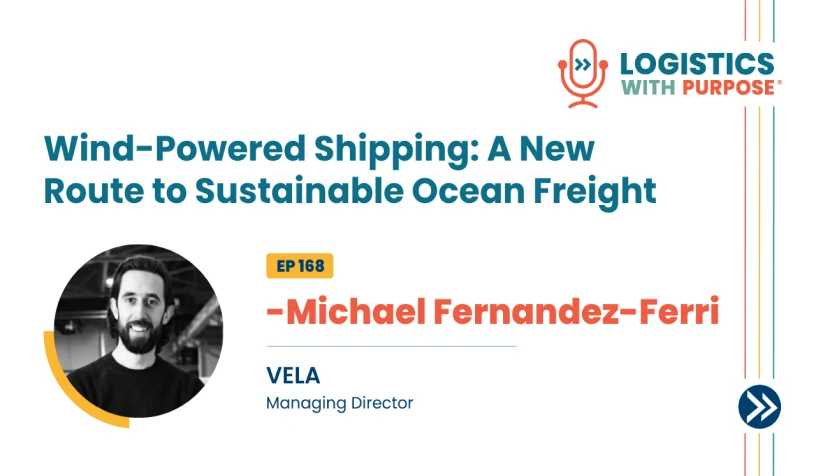
Wind-Powered Shipping: A New Route to Sustainable Ocean Freight | Michael Fernandez-Ferri, VELA

On your favorite podcast platforms:

What if the future of ocean freight depended on a technology that once ruled the seas?


For Michael Fernandez-Ferri, Managing Director of VELA, the answer lies in bringing wind-powered shipping back, not as a step into the past, but as a new approach to modern maritime transport. In this conversation with Enrique Alvarez and Kristi Porter, Michael explains how VELA is rethinking transatlantic freight by combining the power of wind with modern vessel design, ocean-racing technology, and advanced weather forecasting.


The idea began with a simple question: could there be a better way to move goods across the Atlantic than relying entirely on air or conventional sea freight? VELA set out to develop a solution that could offer an alternative for shippers looking for reliable, efficient, and lower-emission transportation. Its wind-powered cargo vessel uses a trimaran design, drawing on innovations from competitive ocean racing, while sophisticated weather-routing systems help plan routes and forecast arrival times.


Michael shares how this approach is changing common assumptions about sailing transportation, particularly around speed, reliability, and commercial viability. He also explains why VELA’s smaller vessel can access secondary ports, avoid some of the congestion at major terminals, and offer a different approach to moving specialized cargo, including pharmaceuticals and temperature-sensitive products.


Michael also reflects on building a company from a blank sheet, bringing together expertise from different industries, staying close to customer needs, and knowing when to focus on proving a business model before pursuing new opportunities. Looking ahead, he shares what it will take to scale wind-powered shipping, from shipper commitment and investment to partnerships that could bring the model to other routes around the world.

In this episode, you'll learn:

How modern ocean-racing technology and weather forecasting are making wind-powered cargo shipping possible

Why wind-powered shipping can offer a different approach to transatlantic freight, port congestion and specialized cargo

Why cost, lead times and transportation quality can make sustainability commercially viable

What it takes to build an innovative business by starting with customer needs rather than technology alone

Why collaboration, shipper commitment and investment are essential to scaling lower-emission maritime transport

Additional Links & Resources:

Know more about VELA: https://vela-transport.com/
Follow VELA on social media:
Subscribe to Logistics With Purpose®: https://logistics-with-purpose.captivate.fm/listen
Powered by Vector Global Logistics: https://vectorgl.com/

This episode was hosted by Enrique Alvarez and Kristi Porter.

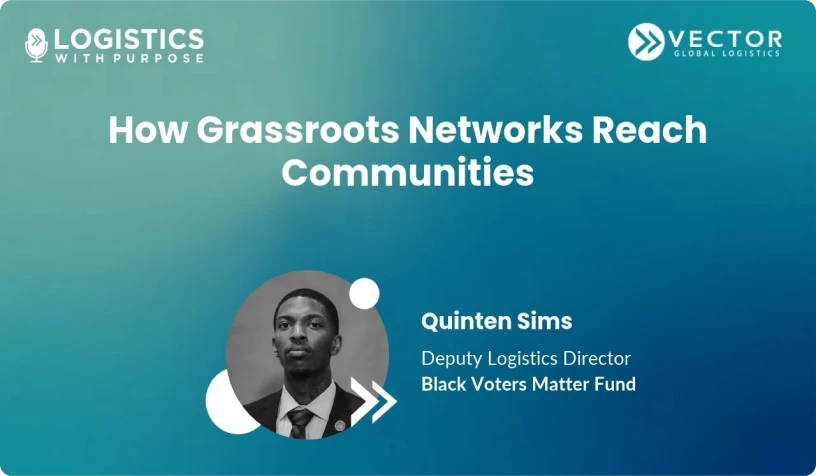
How Grassroots Networks Reach Communities with Quinten Sims, Black Voters Matter Fund

On your favorite podcast platforms:

What happens when a system works on paper but still fails to reach the people it is meant to serve?


For Quinten Sims, Deputy Logistics Director at Black Voters Matter Fund, the answer starts with listening, building trust, and understanding the communities. In this conversation with Enrique Alvarez and Kristi Porter, Quinten explores how lessons from grassroots organizing can reshape the way businesses think about logistics, supply chains, and community engagement.


A central idea emerges from the conversation: “That last mile should be your first mile.” Quinten challenges traditional, one-size-fits-all approaches to reaching communities, explaining why solutions designed in corporate offices can miss local realities. Sometimes, communities described as hard to reach have simply been overlooked. Reaching them requires more than an efficient system. It takes trusted local relationships, consistency, and a willingness to listen before offering solutions.


Quinten also shares how Black Voters Matter Fund works with grassroots partners across the country, allowing local communities to shape the issues and priorities that matter to them. He discusses Grassroots and Grills, an initiative that creates space for important political conversations in familiar community settings, and explains how local businesses play a meaningful role in the organization’s work.


The conversation goes beyond voter access to explore the operational realities of logistics, the importance of prioritization, and the value of investing in people first. Quinten explains why supporting local suppliers can create opportunities that extend beyond a single transaction, strengthening businesses, relationships, and communities over time.


His perspective offers an important lesson for supply chain leaders: reaching people is not just about delivering something to a destination. It is about understanding who is there, earning their trust, and building solutions that work for them.

In this episode, you'll learn:

Why the last mile should be the first consideration when serving overlooked communities

How local knowledge and trusted messengers can outperform one-size-fits-all systems

What Grassroots and Grills teaches us about community engagement and accessibility

Why investing in local businesses can create lasting value across supply chains

How consistency, relationship building, and investing in people can strengthen community impact

Additional Links & Resources:

Black Voters Matter Fund: https://blackvotersmatterfund.org/
Follow Black Voters Matter Fund on social media:
Eleven86 Real Artesian Water: https://www.eleven86water.com/
Detroit People’s Food Co-op: https://detroitpeoplesfoodcoop.com/
Subscribe to Logistics With Purpose®: https://logistics-with-purpose.captivate.fm/listen
Podcast powered by Vector Global Logistics: https://vectorgl.com/

This episode was hosted by Enrique Alvarez and Kristi Porter.

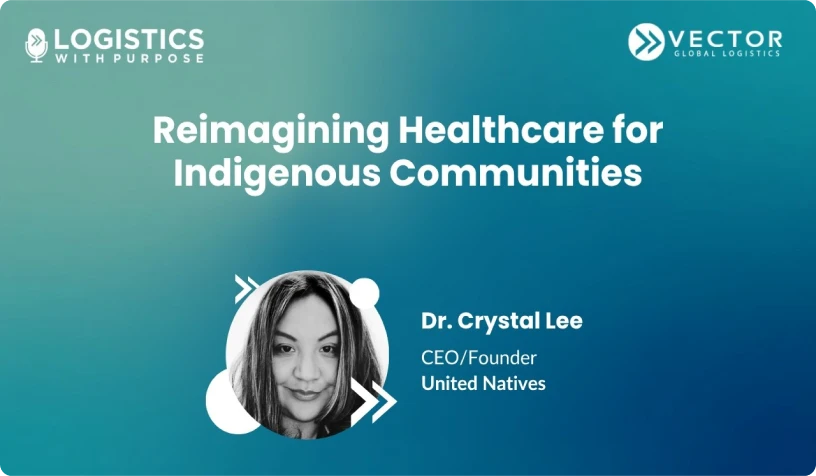
Reimagining Healthcare for Indigenous Communities | Dr. Crystal Lee, United Natives

On your favorite podcast platforms:

Building healthier communities takes more than healthcare alone. It starts with understanding the people being served, the realities they face, and the cultural knowledge that already exists within the community.


Dr. Crystal Lee, CEO and Founder of United Natives, joins Enrique Alvarez and Kristi Porter for a conversation about Indigenous health, community resilience, and innovation. From growing up on the Navajo Nation to becoming one of the nation’s leading voices in Indigenous health equity, Dr. Lee shares how her experiences, culture, and commitment to service have shaped her life’s work.


Together, they explore how Indigenous wisdom and modern technology can work hand in hand to address health disparities and create opportunities for future generations. Dr. Lee also shares the story behind United Natives, which began as a $100 mentorship initiative and evolved into a national organization serving Indigenous communities through health services, youth leadership, emergency response, and more.


The conversation also dives into the upcoming United Natives Health App, a digital ecosystem designed to improve access to healthcare, education, community resources, and support for missing and murdered Indigenous relatives. Dr. Lee also shares her broader vision for creating opportunities for future generations, including why sports remain a powerful pathway to education and long-term success for Indigenous youth.


Dr. Lee’s perspective is a reminder that lasting change starts with listening, building trust, and recognizing that the decisions we make today can shape communities for generations.

In this episode, you'll learn:

The story behind United Natives and its national impact

Lessons learned from leading COVID-19 response efforts in Indigenous communities

Why interconnectedness is a powerful leadership principle

How sports can create educational and professional opportunities

What CEOs and organizations can learn from Indigenous leadership perspectives

Additional Links & Resources:

Learn more about United Natives: https://www.unitednatives.org
Connect with United Natives on social media:
Subscribe to Logistics with Purpose®: https://logistics-with-purpose.captivate.fm/listen
Podcast powered by Vector Global Logistics: https://vectorgl.com/

This episode was hosted by Enrique Alvarez and Kristi Porter.

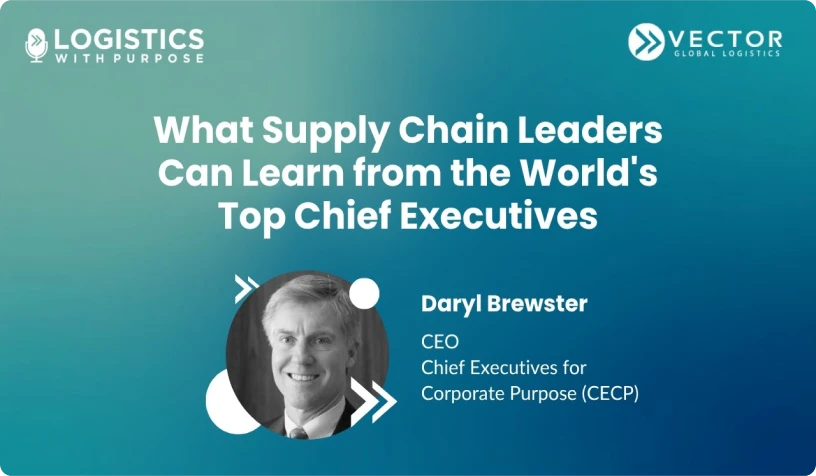
What Supply Chain Leaders Can Learn from the World’s Top Chief Executives | Daryl Brewster, CECP

On your favorite podcast platforms:

What separates companies that thrive for decades from those that struggle to sustain success? According to Daryl Brewster, the answer often comes down to leadership, employee engagement, and a clear understanding of who the business serves.


As CEO of CECP (Chief Executives for Corporate Purpose), Daryl works with hundreds of the world’s largest companies to help executives create long-term value for employees, customers, communities, and shareholders. Throughout his career, he has seen firsthand how organizations achieve stronger performance when people understand the impact of their work and how it contributes to something bigger than themselves.


In this episode of Logistics With Purpose®, host Enrique Alvarez sits down with Daryl Brewster for a conversation about leadership, employee engagement, business performance, stakeholder value, and the future of work.


Daryl shares lessons from his leadership journey and explains why engaged employees often become the foundation for stronger customer experiences, how leaders can build trust during periods of uncertainty, and why long-term value creation requires looking beyond short-term results.


The conversation also explores how artificial intelligence, technological disruption, and evolving workforce expectations are changing the way organizations operate. Daryl addresses what leaders need to do to remain effective in a rapidly changing business environment and why human connection continues to be a critical competitive advantage.


Whether you’re leading a global enterprise, managing a supply chain team, or navigating business transformation, this conversation provides practical lessons on creating lasting value in an increasingly complex world.

Additional Links & Resources:

Learn more about CECP: https://cecp.co/
Connect with Daryl Brewster on LinkedIn: https://www.linkedin.com/in/darylbrewster
CECP data and resources: https://cecp.org/data-resources/
Learn more about Mana Nutrition: https://mananutrition.org/
Subscribe to Logistics With Purpose®: https://logistics-with-purpose.captivate.fm/listen
Podcast powered by Vector Global Logistics: https://vectorgl.com/
This episode was hosted by Enrique Alvarez

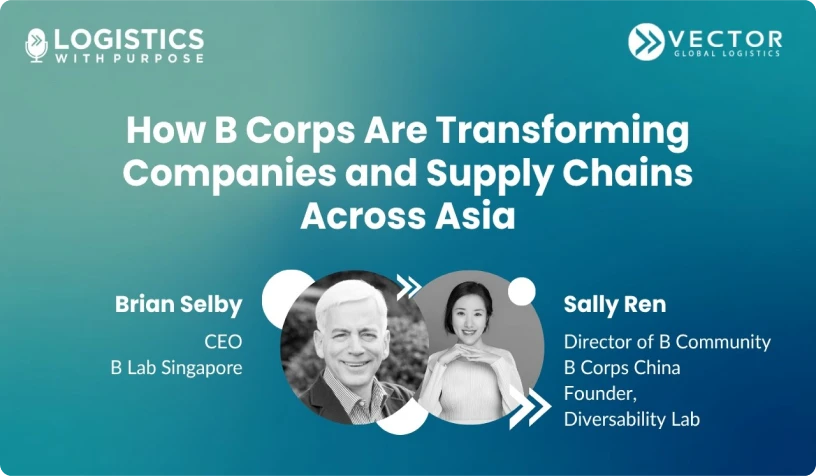
How B Corps Are Transforming Companies and Supply Chains Across Asia | Purpose-Driven Supply Chain

On your favorite podcast platforms:

Across Asia, a growing number of businesses are challenging the idea that success should be measured by profit alone.


Brian Selby, CEO of B Lab Singapore, and Sally Wren, Founder of Diversability Lab and Director of the B Community at B Corps China, are helping organizations rethink the role business can play in society. Through the B Corp movement, they are working with companies that seek to create value not only for shareholders, but also for employees, communities, customers, and the environment.


In this episode of Logistics With Purpose®, host Enrique Alvarez and special host Nuria Sierra sit down with Brian Selby and Sally Wren for a conversation about how B Corps are redefining success in business, why purpose and profit can go hand in hand, and what it takes to build organizations that create lasting value for people, communities, and the planet.


Brian and Sally share how the B Corp community is evolving across Singapore, China, and the broader region, why stakeholder-focused leadership is gaining momentum, and how purpose-driven businesses are building resilience in a rapidly changing world. Their insights challenge traditional assumptions about growth, performance, and long-term value creation.


The conversation also explores the influence supply chains and logistics networks have on sustainability, inclusion, employee wellbeing, and environmental stewardship. From reducing waste to strengthening communities, business decisions made every day can create impacts that extend far beyond the bottom line.


At its core, this is a conversation about leadership, responsibility, and the future of business.


Explore this conversation through the lens of purpose-driven logistics, where business, people, partnership, and positive impact come together.


Additional Links & Resources:

Learn more about B Lab Singapore: https://www.blab.sg/
Learn more about B Corps China: https://bcorporation.cn/
Connect with Brian Selby on LinkedIn: https://www.linkedin.com/in/brian-selby/
Learn more about Logistics With Purpose®: https://logisticswithpurpose.co/
Subscribe to Logistics With Purpose®: https://logistics-with-purpose.captivate.fm/listen
Podcast powered by Vector Global Logistics: https://vectorgl.com/

This episode was hosted by Enrique Alvarez and Nuria Sierra.

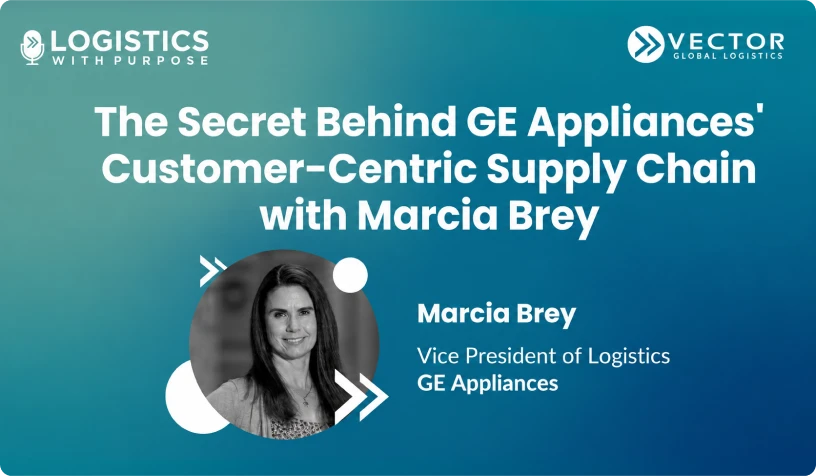
The Secret Behind GE Appliances’ Customer-Centric Supply Chain with Marcia Brey

On your favorite podcast platforms:

What does it take to lead a supply chain that delivers an appliance every 10 seconds while staying flexible, customer-focused, and purpose-driven? Marcia Brey, Vice President of Logistics at GE Appliances, joins Enrique Alvarez and Kristi Porter to share lessons on leadership, innovation, operational excellence, and building supply chains that keep customers at the center.


With more than 30 years of experience, Marcia takes us behind the scenes of GE Appliances’ complex U.S. supply chain and explains why adaptability matters more than perfect forecasting in an unpredictable world. She discusses the company’s “zero distance” philosophy, the importance of putting logistics closer to the customer, and why empowering employees closest to the work can transform decision-making.


The conversation also explores how logistics can create impact beyond business, including GE Appliances’ partnership with the American Red Cross to develop a mobile laundry unit for disaster response. Marcia reflects on mentorship, curiosity, hands-on leadership, U.S. manufacturing, and the belief that operational excellence and purpose can—and should—go hand in hand.

In this episode, you'll learn:

How GE Appliances delivers an appliance every ten seconds while maintaining a customer-first approach

The three leadership principles Marsha believes are essential for managing complex logistics operations

Why empowering frontline employees leads to faster decisions and better business outcomes

How the “Zero Distance” philosophy helps organizations stay connected to customers and communities

What resilient supply chains look like in an era of constant disruption and uncertainty

Additional Links & Resources:

Connect with Marcia Brey on LinkedIn: https://www.linkedin.com/in/marcia-brey-1511451a
Learn more about GE Appliances: https://www.geappliancesco.com/
Subscribe to Logistics With Purpose®: https://logistics-with-purpose.captivate.fm/listen
Podcast powered by Vector Global Logistics: https://vectorgl.com/
This episode was hosted by Enrique Alvarez and Kristi Porter.

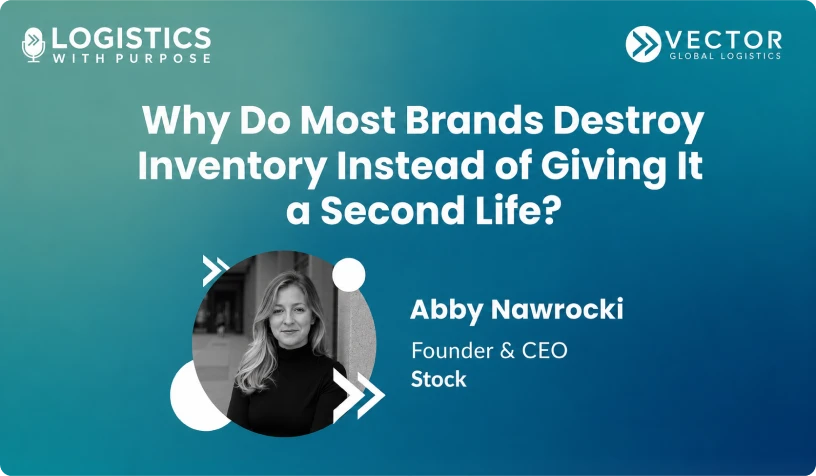
Why Do Most Brands Destroy Inventory Instead of Giving It a Second Life? Insights from Abby Nawrocki

On your favorite podcast platforms:

What happens when perfectly usable products become excess inventory?


For businesses, surplus goods often mean rising costs, wasted resources, and sustainability challenges. But what if that inventory could create value instead of waste?


Joining host Enrique Alvarez and special co-host Nathan Chaney, Abby Nawrocki shares how logistics can play a critical role in solving one of the most overlooked challenges in the supply chain. The conversation explores the systems, partnerships, and technology required to move surplus products to the people and organizations that need them most.


Abby is helping companies rethink what happens to abandoned freight, overstocked products, and customer returns. By connecting excess inventory with nonprofit organizations, her company, Stock, helps brands and logistics providers reduce waste, support communities, and create measurable impact.


From improving efficiency and potentially lowering costs to strengthening community impact, this conversation offers a different perspective on the role logistics can play beyond simply moving goods.


Explore this conversation through the lens of purpose-driven logistics, where business, people, partnership, and positive impact come together.
In this episode, you'll learn:

Why excess inventory, abandoned freight, and returns have become one of the biggest hidden challenges in modern supply chains.

How brands can redirect surplus products to nonprofits instead of sending usable goods to landfills.

How technology and logistics coordination can make inventory donations as seamless as e-commerce fulfillment.

Why solving inventory waste creates both business value and measurable social impact.

How partnerships between brands, 3PLs, carriers, and nonprofits can turn supply chain inefficiencies into community support.

Additional Links & Resources:

Connect with Abby Nawrocki on LinkedIn: https://www.linkedin.com/in/abby-nawrocki-6322015a/
Learn more about Stock: https://www.stockitbetter.com/
Subscribe to Logistics With Purpose®: https://logistics-with-purpose.captivate.fm/listen
Podcast powered by Vector Global Logistics: https://vectorgl.com/

This episode was hosted by Enrique Alvarez and special co-host Nathan Chaney

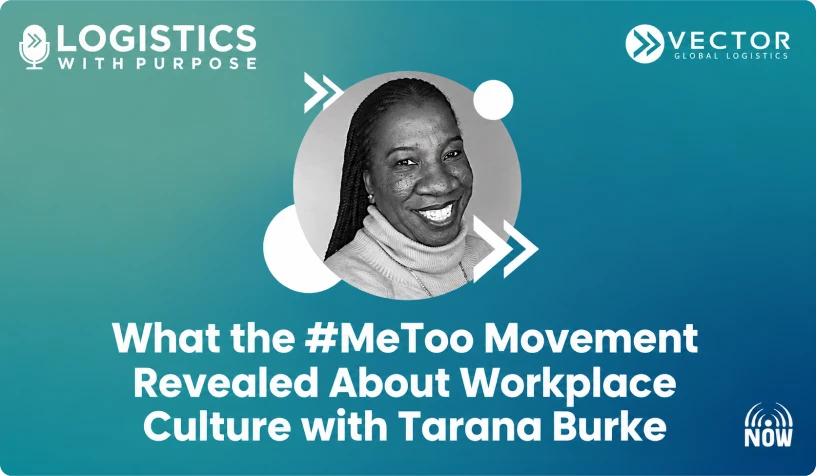
What the #MeToo Movement Revealed About Workplace Culture with Tarana | Purpose-driven leadership

On your favorite podcast platforms:

Workplace culture is shaped by the conversations leaders are willing to have. Tarana Burke, Founder of the Me Too Movement and Chief Vision Officer of Me Too International, joins Enrique Alvarez and Kristi Porter to discuss leadership, empathy, accountability, and creating safer organizations.


While the Me Too Movement is often associated with social change, Tarana explains why conversations about sexual and gender-based violence belong in every industry, including logistics and supply chain. She shares how organizational culture, leadership, transparency, and accountability directly impact employee well-being, trust, and business performance.


From the origins of the Me Too Movement to practical advice for executives, HR leaders, managers, and coworkers, this discussion challenges leaders to build workplaces where people feel seen, heard, valued, and safe.


If you’re passionate about leadership, organizational culture, employee engagement, or creating workplaces where everyone can thrive, this episode is one you won’t want to miss.

In this episode you'll learn:

Why psychological safety is essential for high-performing organizations

How silence becomes normalized in workplace culture

The leadership behaviors that create trust and accountability

How peers, managers, and executives all play a role in preventing harmful workplace cultures

Why Tarana Burke believes sexual and gender-based violence is a community problem that requires a community response

Explore this conversation through the lens of connecting values, people, business decisions, and meaningful impact.

Additional Links & Resources:

Connect with Tarana Burke: https://www.linkedin.com/in/taranajburke/
Learn more about me too. International: https://metoomvmt.org/
Subscribe to Logistics with Purpose®: https://logistics-with-purpose.captivate.fm/listen
Podcast powered by Vector Global Logistics: https://vectorgl.com/
This episode was hosted by Enrique Alvarez and Kristi Porter.

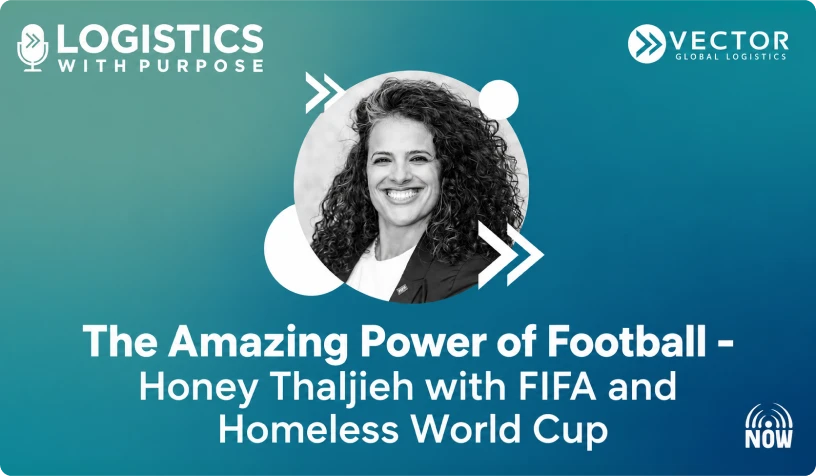
Logistics with Purpose Classic: The Amazing Power of Football – Honey Thaljieh with FIFA and Homeless World Cup

On your favorite podcast platforms:

Football can be much more than a game. It can challenge social barriers, bring communities together, and give people the confidence to imagine a different future.


Honey Thaljieh, FIFA’s public relations manager and a pioneering advocate for equality, inclusion, and human rights, shares how football helped shape her journey from the streets of Bethlehem to the international stage. As the first woman to captain the Palestinian national football team and a co-founder of women’s football in Palestine, Honey has spent her career challenging expectations and opening doors for others.


Growing up in a community affected by conflict, Honey saw how circumstances could limit people’s opportunities, especially those of girls and women. When she began playing football with boys in the streets, she faced resistance from people who believed the sport was not appropriate for girls. But she refused to accept those limitations. Her determination to play became part of a much bigger ambition: to help create opportunities for others through sport.


Honey reflects on how the dream of playing football evolved into a commitment to building the women’s game in Palestine and eventually working at FIFA. She explains why the impact of sport extends far beyond the field, creating opportunities for dialogue, equality, and connection across communities.


The conversation also explores her connection with the Homeless World Cup, an initiative that uses football to engage people experiencing homelessness and other forms of marginalization. Through global partnerships and social impact programs, Honey works to help make sport more accessible and ensure that people from underserved communities have opportunities to participate and thrive.


For Honey, football’s greatest power lies in its ability to unite people around shared values. Her story is a reminder that change often starts with a simple dream, the courage to challenge expectations, and the determination to make opportunities possible for others.

In this episode, you'll learn:

How Honey Thaljieh challenged gender expectations and helped build women's football in Palestine.

Why sport can be a platform for advancing equality, inclusion, human rights, and peace.

How personal experiences can inspire leaders to turn individual ambitions into opportunities for entire communities.

How FIFA's global partnerships can use football to support marginalized communities and create social impact.

Why organizations such as the Homeless World Cup demonstrate the power of sport to build connection, participation, and opportunity.

Additional Links & Resources:

Connect with Honey Thaljieh on LinkedIn: https://www.linkedin.com/in/honey-thaljieh-a7640828/
Watch Honey Thaljieh's TEDxZurich talk: http://www.tedxzurich.com/speaker/honey-thaljieh/
Watch the interview with Mel Young: https://youtu.be/hbbrcjLDAZg?si=g4j8WFZLQMv0_yEr
Watch the interview with Hope Solo: https://youtu.be/-GYS4zpWWdU?si=qmnAonOw4Vww4iaS
Listen to more conversations about logistics, leadership, and the people working to make a difference: https://logistics-with-purpose.captivate.fm/listen
Podcast powered by Vector Global Logistics: https://vectorgl.com/

This episode was hosted by Enrique Alvarez and Nuria Sierra

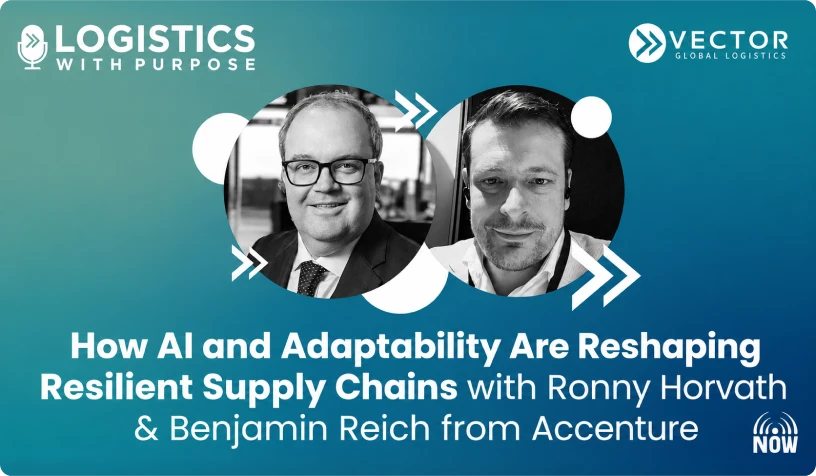
How AI and Adaptability Are Reshaping Resilient Supply Chains with Ronny | Logistics strategy

On your favorite podcast platforms:

AI is transforming supply chains, but technology alone isn’t enough. Benjamin Reich and Ronny Horvath from Accenture join Enrique Alvarez and Kristi Porter to explore how resilience, adaptability, and human-centered leadership will shape the future of supply chain management.


From AI-driven logistics and supply chain orchestration to trust, culture, and meaningful workplace relationships, this episode explores what it really takes to build resilient supply chains in a rapidly changing world. Benjamin and Ronny share practical insights on how organizations can adopt AI without waiting for “perfect” data, why curiosity and adaptability matter more than ever, and how companies can balance automation with humanity.


You’ll also hear personal stories about their journeys from Germany to leading global transformation initiatives across the U.S., lessons learned from companies like Porsche and IBM, and why the future of logistics depends just as much on people and trust as it does on technology.


Whether you’re a supply chain leader, technology enthusiast, logistics professional, or someone curious about how AI is reshaping business, this conversation delivers practical takeaways, leadership wisdom, and an inspiring look at the future of work.

In this episode, you'll learn:

Why adaptability has become a greater competitive advantage than cost efficiency in today's supply chains.

How leading organizations are moving from reactive operations to proactive, prescriptive supply chain management.

Why supply chain orchestration requires connecting suppliers, warehouses, carriers, customers, and external risk data into one ecosystem.

How companies can start adopting AI without waiting for perfect data or fully transformed systems.

Why trust, human relationships, and frontline expertise remain essential in an AI-powered future.

Explore this conversation through the lens of logistics strategy, leadership, operational decisions, and resilient supply chains.

Additional Links & Resources:

Connect with Ronny Horvath: https://www.linkedin.com/in/ronhorvath/
Connect with Benjamin Reich: https://www.linkedin.com/in/bereich/
Learn more about Accenture: https://www.accenture.com/us-en
(Mentioned) Götz Wolfgang Werner: https://en.wikipedia.org/wiki/G%C3%B6tz_Werner
Subscribe to Logistics with Purpose®: https://logistics-with-purpose.captivate.fm/listen
Podcast powered by Vector Global Logistics: https://vectorgl.com/

This episode was hosted by Enrique Alvarez and Kristi Porter.